
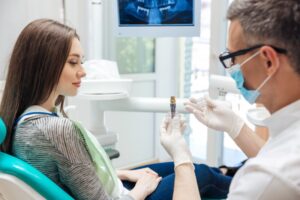
Dental implants are one of the most reliable and long-lasting solutions for replacing missing teeth. Designed to function like natural tooth roots, implants restore both appearance and chewing ability while helping preserve jawbone health. While dental implant success rates are very high, proper care and planning are essential to ensure long-term success.
Here are 4 important ways to reduce the risk of dental implant failure and protect your investment.
1. Choose an Experienced Dental Professional
Successful implant treatment begins with careful planning and precise placement. Dental implants must be positioned correctly within healthy bone to properly fuse with the jaw through a process called osseointegration.
An experienced dentist or oral surgeon will evaluate bone density, gum health, and overall oral condition before treatment begins. Advanced imaging technology allows for accurate placement and minimizes complications.
Patients with underlying conditions such as gum disease should complete necessary treatment beforehand. Healthy gums and sufficient bone support are critical for long-term implant stability.
2. Maintain Excellent Oral Hygiene
Even though dental implants cannot develop cavities, the surrounding gum tissue can still become infected. A condition called Peri-implantitis occurs when bacteria accumulate around the implant, causing inflammation and bone loss.
Daily brushing and flossing are essential to prevent plaque buildup around the implant site. Many dentists recommend using interdental brushes, water flossers, or implant-specific floss to clean hard-to-reach areas effectively.
Keeping the gums healthy helps maintain the strong bond between the implant and jawbone.
3. Avoid Smoking and Tobacco Use
Smoking is one of the leading risk factors for dental implant failure. Tobacco restricts blood flow, slows healing, and interferes with the body’s ability to integrate the implant with bone.
Patients who smoke are more likely to experience infection, delayed healing, and implant instability. Quitting smoking—especially before and after implant surgery—significantly improves success rates and promotes faster recovery.
Even reducing tobacco use during the healing period can make a meaningful difference in treatment outcomes.
4. Protect Your Implant from Excess Pressure
Dental implants are strong, but excessive force can compromise them over time. Teeth grinding or clenching, known as Bruxism, places repeated stress on implants and surrounding bone.
If you grind your teeth at night, your dentist may recommend a custom nightguard to protect both implants and natural teeth. Avoid chewing hard objects such as ice, pens, or hard candies that could damage restorations attached to the implant.
Regular dental checkups also allow your dentist to monitor bite alignment and ensure pressure is evenly distributed.
Dental implants are designed to last for decades, but their success depends largely on patient habits and ongoing care. Choosing a skilled provider, maintaining excellent oral hygiene, avoiding tobacco, and protecting your implant from excessive force all play vital roles in preventing complications.
About the Practice
Would you like to restore your smile with the highest rated tooth replacement method? At Lake Oconee Dentistry, we have the solution with dental implants. Why choose us? Our team can handle the entire procedure, start to finish, in one convenient location. We use state-of-the-art technology like a Cone Beam/CT scanning for precise, safe treatment. And when it comes to costs, just know that we’re an insurance-friendly practice. Book online with us or call (706) 453-1333.