
Dental Implants – Lake Oconee, GA
A Whole New Way to Rebuild Your Smile
When one or more teeth have been lost, it can lead to devastating consequences for the patient’s oral function, overall health, and quality of life. Thankfully, dental implants are available as the ideal reconstructive solution, recreating dental structure that looks and feels virtually indistinguishable from the genuine article. At Lake Oconee Dentistry, Dr. Patti Bradley, Dr. David Bradley, Dr. Andrea Feldman, and Dr. Shelly Pound can take you through every phase of the process for tooth replacement, using dental implants in Lake Oconee, GA. We can ensure a smooth and successful process with a team you already know and trust – no outside specialists required. Contact our office today to get started!
Why Choose Lake Oconee Dentistry for Dental Implants?
- Start-to-Finish Dental Implant Care in One Location
- Insurance-Friendly Dental Practice
- Cone Beam/CT Scanning for Precise, Safe Treatment
Got Dental Implant Questions? We've Got Answers!
Click the button below for our Dental Implant Frequently Asked Questions Video Library
What Are Dental Implants?
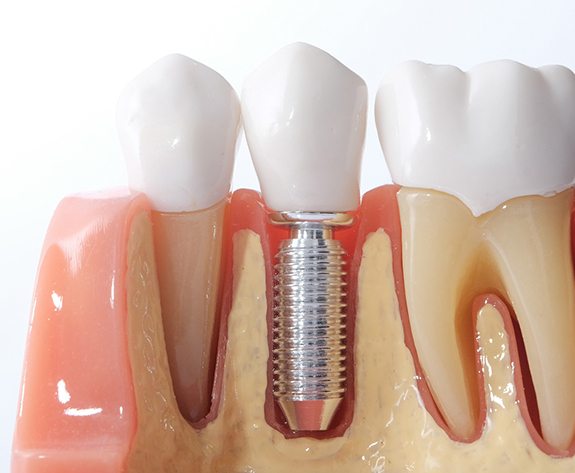
While traditional tooth replacement options are designed to only replace the crown (the white portion that makes up your smile) of the tooth, there’s another, equally important component that typically ends up ignored – the root. The root is embedded in the patient’s jaw, and its presence stimulates the jawbone. Even if the patient’s visible smile is restored, the permanent loss of a tooth root can result in jawbone deterioration, reduced oral health, and even a “hunched” facial appearance over time.
Dental implants are highly successful because they’re the only treatment option that fully replicates the entire structure of a natural tooth – root and all! Because of this, patients can enjoy the valuable health benefits, stunning aesthetic improvements, solid oral function, and long-lasting durability they deserve.
The 4-Step Dental Implant Process

Rebuilding your smile with dental implants is a multi-step process that can potentially take months or even around a year to complete. Fortunately, the many long-term benefits that dental implants have to offer make them well worth the wait in the eyes of many patients! Before you take your first step toward replacing your missing teeth with dental implant posts, here’s a closer look at the four main steps of the overall process.
Initial Dental Implant Consultation
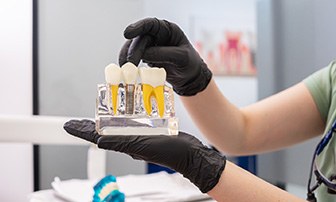
One of the main goals of your initial dental implant consultation is to determine whether dental implants are a viable option in your case. Using state-of-the-art technology, we’ll thoroughly evaluate your mouth and jaw to determine whether implants can be placed. In some cases, preliminary treatments such as bone grafting may be required before you can be considered a dental implant candidate.
If we decide dental implants are a good choice for you, we can discuss what the next steps of the process will look like in full detail. Naturally, we’ll make sure to give you an accurate idea of how long each step will take as well as the costs involved.
Dental Implant Surgery

Our team is able to place dental implants in-office, so you won’t have to worry about being referred to an unfamiliar specialist across town. At the start of the surgery, a local anesthetic will be administered to keep your mouth numb. After that, the gums will be opened, and the implant posts will be placed at carefully chosen locations. Once the procedure is complete, the gums will be sutured shut, and a special cap will be attached to implant posts for their protection.
Dental Implant Osseointegration & Abutment
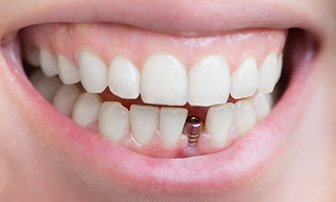
In order to be successful, dental implants need to join with the jawbone via a process called osseointegration. This typically takes about 3 to 6 months. Our team will give you instructions for taking care of your mouth during this time in order to ensure that osseointegration goes as smoothly as possible.
Once the implant posts have formed a sufficiently strong bond with the jaw, you’ll be ready to receive abutments. These are small metal connector pieces that will ultimately be responsible for keeping your replacement teeth attached to your implant posts. Placing abutments will require another surgical procedure, but it will be smaller and less invasive compared to implant surgery.
Delivery of Dental Implant Restoration(s)
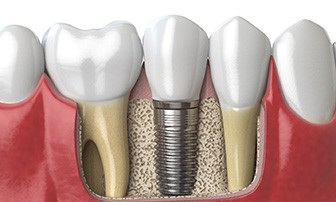
After your mouth has healed from abutment placement, we can take the impressions required to design the final prosthesis that will ultimately act as your replacement teeth. Said prosthesis could be a crown, bridge, or denture depending on the extent of your tooth loss. Once the prosthesis ready, we’ll carefully attach it to your implant posts and put the finishing touches on your new smile.
Benefits of Dental Implants

Dental implants are such a highly recommended tooth replacement treatment because they offer a variety of benefits that distinguish them from traditional prosthetics. Unlike dental bridges and dentures that can only mimic the look of a complete smile, dental implants offer optimal stability, greater functionality, and the ability to strengthen your jawbone to prevent changes to your facial shape. You will find that in choosing these permanent prosthetics, you’ll have a whole new outlook on life.
Some of the benefits of dental implants in Lake Oconee you’ll get to enjoy include:
Day-to-Day Benefits

- Nutrient-Rich Diet: Dentures can often make it difficult to eat nutrient-rich foods; however, with dental implants, you can freely eat textured and denser foods that are good for your oral and overall health. Not to mention, your bite force and chewing power will be much greater, and you won’t have to worry about your prosthetics slipping or falling out of place.
- Greater Aesthetics: As long as you have a trusted implant dentist in Lake Oconee who knows how to properly place dental implants, you can expect your results to look completely natural. Made from high-quality materials, your new teeth will blend in with the rest of your smile with much ease.
- Easy Maintenance: Dentures require that you soak them at night, and dental bridges can be difficult to clean, putting you at risk for tooth decay and gum disease. Dental implants, however, are easy to maintain because all you need are the instruments you already use to brush and floss your teeth.
- Better Quality of Life: Dental implants make it possible to embrace a better quality of life, especially as it pertains to your confidence. When you have a complete smile that looks and feels good, you’re more likely to take advantage of new opportunities at work and spend time surrounded by family, friends, and colleagues.
Health Benefits

- Unaltered Natural Teeth: Instead of having your healthy abutment teeth altered to fit a dental bridge, dental implants fit into the vacated sockets, requiring no anchors other than your jawbone. This ensures your remaining teeth are untouched and maintain their complete structure.
- Jawbone Stimulation: Because dental implants in Lake Oconee are surgically placed into your jawbone, they mimic the natural tooth root structure. Each time you bite down or chew, your bone is stimulated, allowing it to remain strong and avoid potential collapse later on.
- No Shifting Teeth: Tooth loss is known for causing many orthodontic problems. If you’re missing a tooth and notice your nearby healthy teeth are trying to shift, it’s because they’re trying to close the gap. Unfortunately, this causes alignment problems. But with dental implants, your healthy teeth will stay where they are and minimize any potential need for orthodontic treatment.
- Improved Overall Health: Losing a tooth doesn’t just affect your oral cavity and self-esteem, it also causes various health problems to occur. Osteoporosis, heart disease, and diabetes are just a few of the many systemic issues that can develop. However, if you choose dental implants, you can reduce your risk, improve your smile, and maintain greater overall health in the long run.
Long-Term Benefits

- High Success Rate: Upon initial placement and even after 10 years, dental implants can have a success rate of 95%. Of course, much of this depends on how well you take care of your new teeth, which is why it’s important to maintain optimal oral hygiene.
- Longevity: It is possible for your dental implants to last 30 years or even a lifetime with proper maintenance! This is vastly different than the 5-10 years you might get from dentures or a dental bridge.
- The Ability to Save Money: While dental implants are more expensive initially than dentures or dental bridges, they will save you a tremendous amount of money throughout your lifetime. You won’t need denture adhesives, special cleaning supplies, or regular adjustments and replacements.
Who Dental Implants Can Help

There are multiple options for dental implant treatment, and our Lake Oconee team’s recommendation will depend on the extent of the patient’s tooth loss (how many implants need to be restored), as well as the available budget and time commitment. They include:
Missing One Tooth
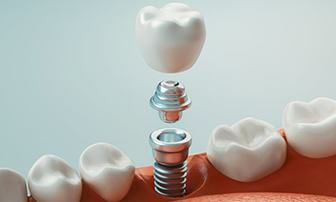
For a single missing tooth, we can place one dental implant in the mouth below the gums. This will restore the root structure of the tooth. We can then attach a customized dental crown to it to keep your surrounding teeth from drifting out of place and fill the gap.
Missing Multiple Teeth
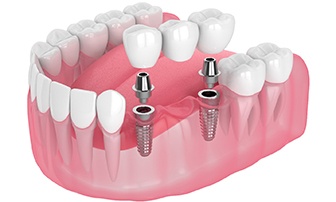
Instead of needing to alter your surrounding healthy teeth, our team can secure a customized dental bridge to two implants located on either side of the gap in your smile.
Missing All Teeth
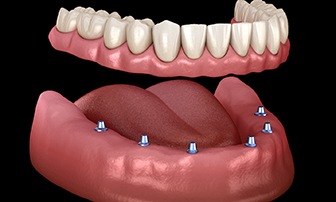
To secure a complete denture to your mouth, we can place anywhere from four to eight dental implants that we strategically place along your arch. This will eliminate any slipping or shifting that may occur when you eat or speak, which is common with traditional dentures.
Understanding the Cost of Dental Implants

At first, you may be a bit apprehensive to replace your missing teeth with dental implants. After all, they can cost more than bridges or dentures. However, every patient’s cost is different, and your insurance may decide to cover certain portions of the procedure, such as the restoration or any necessary preliminary treatments. We can go over a more detailed cost estimate with you at your dental implant consultation and determine a way for you to rebuild your smile without breaking the bank.
Types of Dental Implants

One of the primary factors in determining the cost of your implant treatment is how many implants you need to rebuild your smile. For a single missing tooth, we can place just one titanium post and top it with a lifelike dental crown. If you’re missing multiple teeth in a row, you can receive an implant-supported bridge, which doesn’t alter your surrounding teeth like a traditional bridge does. Lastly, for an entire missing arch, we can place anywhere from four to eight implants in your jaw to support a full denture, which can be either fixed or removable.
What Are the Stages of Dental Implant Treatment?
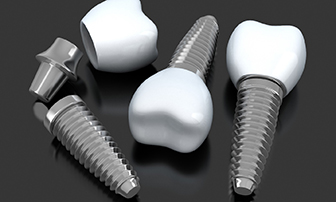
We’ll walk you through the different stages in greater detail at your consultation. Because everything takes place in separate appointments, you can break your treatment cost up into manageable chunks. Some of the steps of your treatment might include:
- Preparatory procedures such as bone grafting or periodontal therapy
- Surgical placement of implants directly in the jawbone
- Osseointegration, which is the months-long process during which your implants fuse to your jawbone
- Placement of abutments, which are small metal connector pieces
- Placement of restorations atop your abutments, whether that be a crown, bridge, or denture
Are Dental Implants Worth the Investment?

Absolutely! Dental implants offer a multitude of benefits to your everyday life that make them well worth the investment. While there are other tooth replacement options available, like dentures and dental bridges, none of them offer the same longevity, strength, and stability that implants do. Additionally, implants are incredibly easy to maintain; all you have to do is regularly brush, floss, and attend checkups. Because implants replace the entire tooth structure, they’ll look and feel as natural as the pearly whites you were born with.
Does My Dental Insurance Cover Dental Implants?

Although most dental insurance companies don’t cover the full cost of dental implants, they may provide coverage for other elements of the treatment, such as periodontal therapy, bone grafting, or your restoration. It’s always worth your while to check your individual policy to see what they cover. If you need help getting in touch with your insurance carrier, our team is more than happy to help.
Dental Implant FAQs

At Lake Oconee Dentistry, we often recommend dental implants after tooth loss because we know they’re the closest thing to natural teeth. Our experienced implant dentists, Dr. Patti Bradley and Dr. Shelly Pound, handle the entire procedure from start to finish and are always happy to explain the process so you know what to expect. Below, you’ll find answers to the FAQs we hear most often, but feel free to contact us anytime with other questions as they arise.
Are dental implants safe?
Dental implants are absolutely safe. They’re made from the same biocompatible, surgical-grade titanium that’s used in knee and hip replacements. They’ve also been used for several decades to successfully restore the smiles of countless patients. In fact, it’s estimated that an astounding five million dental implants are placed every year, so you can rest assured that they’re safely used for a wide variety of people.
How successful are dental implants?
One of the major reasons we like to recommend dental implants is their high success rate, which is over 95% in non-smokers. However, since it’s only 85% in smokers, we recommend quitting tobacco before having the procedure done.
Does it hurt to get dental implants?
Not nearly as much as you might expect. In terms of discomfort, many people compare implant surgery to having a tooth extracted. And since Dr. Patti Bradley and Dr. Shelly Pound always starts by making sure you’re completely numb beforehand, you’ll only feel pressure, not pain. In addition, we also offer sedation options to make the procedure comfortable for everyone, even anxious or fearful patients.
What is a bone graft, and will I need one before getting dental implants?
A healthy and dense jawbone is necessary to support both natural teeth and dental implants. However, as soon as a tooth is lost, the bone begins to deteriorate. If it’s been a long time since you lost your teeth, you may not have enough jawbone to support implants.
To evaluate the bone density in your jaws, we’ll take a detailed, three-dimensional image with our cone beam scanner before making a recommendation. If we find that your jawbone is too thin or too weak, we may recommend a bone graft. This procedure adds bone tissue to your jaw to strengthen and fortify it, enabling it to support implants in the future.
How do I take care of my dental implants?
Fortunately, maintaining your dental implants isn’t complicated and is actually a lot like taking care of natural teeth. Use the following tips to help ensure the long-term success of your new smile:
- Schedule regular checkups – It’s important to monitor your implants regularly so we can catch and treat any potential problems before they lead to failure.
- Practice good oral hygiene - Your implants can’t get cavities, but they can develop a type of gum disease. Healthy gum tissue is important to provide strength and stability, so be sure to keep the gums clean by brushing at least twice a day and flossing once.
- Wear a nightguard, if necessary – The chronic forces from nighttime clenching and grinding can damage your implant over time. Wearing a custom-made nightguard will protect both your natural teeth and dental implants.
Do Dental Implants Feel Natural?
As a matter of fact, yes – dental implants feel quite natural. They won’t cause any “odd” or unpleasant sensations once they’ve become permanent parts of your mouth.
Remember, dental implants are made to look and act exactly like tooth roots. It’s only natural that they also *feel* exactly like your original teeth, especially once they’ve stabilized. The posts also lack any nerve endings, so they themselves won’t cause uncomfortable sensations. Anything you feel around them – heat, cold, pressure, etc. – will come from the nearby gum tissues.
If anything ever feels “off” near your implants, consult your dentist as soon as possible. You may be facing treatment-related complications.
Will People Notice That I Have Dental Implants?
Most onlookers – whether friends, family, or others – won’t notice you have dental implants, especially if the posts were well-placed. They’ll instead see the restorations as natural parts of your smile.
Note that dental implants are customized for each patient. To ensure they look “real,” dentists take impressions of your mouth that inform their design. It follows that no one except a dentist could differentiate your implants from your natural teeth.
Also, keep in mind that implants fuse with your jaw. A patient doesn’t have to hold their jaw in a strange way to keep the restorations stable. To that extent, your results won’t look like ill-fitting dentures.
Do Dental Implants Decay?
Since they aren’t made of enamel, dental implants don’t decay as natural teeth do. They never get cavities regardless of how long they’re used.
Of course, the adjacent teeth and gums could still threaten the posts. If a nearby tooth gets a cavity, your implant might become unstable over time. The same applies when your gums become infected; the resulting gum recession increases your risk of dental implant failure.
The good news is that you can protect dental implants with good oral hygiene. So, remember to brush twice daily and floss once daily to ensure your restorations don’t fail early.
Maintaining & Caring For Your Dental Implants

With the potential to last a lifetime, dental implants are the gift that keeps on giving. However, you can only enjoy a strong, healthy smile for decades to come if you take care of them properly. By avoiding infection and damage, you can protect yourself from implant failure and the cost that comes with a replacement. Here are a few simple tips for dental implant care in Lake Oconee, Georgia!
Make Oral Hygiene a Priority
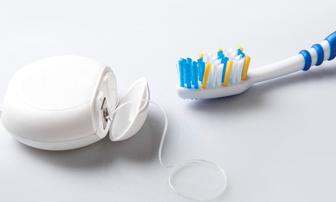
The good news is that your dental implants cannot get cavities, however they are still at risk of failure due to common dental issues like gum disease. In order to prevent infection of your gums, practice regular dental hygiene, including brushing, flossing, and using a nonalcoholic mouthwash. Be sure to spend 2 minutes brushing each session, paying close attention to your gumline.
Eat a Healthy Diet

What you consume affects your body, but it also impacts your oral health. Dental implants in Lake Oconee, Georgia give you the ability to eat virtually anything you want, which is why you should feel free to enjoy a full, nutritious diet. Eat foods that are rich in calcium and Vitamin D to keep your jaw and gums healthy. Do your best to avoid foods that are extra sticky, hard, sugary, or acidic. These items can put your implants at risk of damage or failure if you overindulge.
Break Bad Habits

Dental implants are made to be durable and lasting, however they can still break or fail due to bad habits and lifestyle choices. Stop smoking and using tobacco products because this habit slows down healing and promotes infection. Additionally, avoid using your smile for anything other than chewing, speaking, and smiling. Using your teeth to open packages or bottles is a quick way to damage your grin, which will require a visit to your implant dentist in Lake Oconee, Georgia.
Protect Your Dental Implants
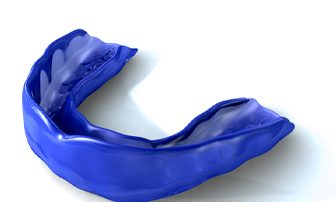
Do you participate in sports or physical activity? If so, it’s vital that you wear a mouthguard to protect your dental implants. Teeth can be injured in contact and non-contact sports, which is why it’s so important to wear a mouthguard. Additionally, wear a nightguard if you suffer from bruxism (teeth grinding) to prevent unnecessary pressure and wear on your implants and restorations. We offer custom-made mouthguards and nightguards to give our patients the best and most comfortable solutions.
Schedule Regular Dental Checkups

Your daily at-home care is the easiest, most proactive way you can try to fend off issues that impact your dental implants. However, routine checkups allow one of our dentists to catch any problems that occur while they are still small. We can save you from more severe and costly dentistry in the future by taking steps early on. Without regular checkups, a warning sign may go unnoticed, leading to your implant eventually failing. These appointments also include a professional cleaning where one of our skilled hygienists can remove plaque and bacteria that are hard to reach on your own.
Dental Implant Post-Op Instructions

Now that you’ve had your dental implants surgically placed, it’s time for the recovery period. Thankfully, it’s nothing to be worried about. Below, we’ll outline what you can expect from treatment, which symptoms are normal, and how you can help your smile heal. If you ever experience any intense, abnormal pain or other strange side-effects not mentioned here, please don’t hesitate to contact us for guidance.
What to Do Directly After Dental Implant Surgery

Immediately following your dental implant surgery, your biggest priority is to leave the forming blood clot over your surgical site(s) untouched so that healing happens smoothly. To that end, please abide by the following rules:
- Do not spit. Use tissues or swallow your saliva.
- Do not use drinking straws.
- Do not smoke for at least the first day but ideally quit permanently or for at least six months.
- Do your best to keep your fingers and tongue away from the surgical site(s).
Common Side-Effects When Recovering from Dental Implant Placement

Following your dental implant placement, you can expect to experience some mild side effects. These are perfectly normal, especially in the first few days after surgery, and may include:
- Intermittent bleeding which can be lessened by gently biting down on gauze with light pressure. This may continue for several days.
- Swelling over the first 72 hours, which could continue for over a week. You can apply cold or warm compresses to help.
- General discomfort can be treated with over-the-counter pain medication.
All these side effects should be temporary and will gradually subside as time goes by. If this is not the case, please let us know as soon as possible.
Your Diet After Dental Implant Surgery

For the first few days following your dental implant surgery, we recommend you stick to a softer, non-abrasive diet full of the following nutritious foods:
- Mashed potatoes
- Yogurt
- Ice cream
- Pudding
- Soup (nothing extremely hot)
- Scrambled eggs
- Pasta
You may return to eating a normal diet as soon as you feel up to it, but we recommend limiting any overly crunchy or tough foods and avoiding directly chewing on your dental implant site(s).
Post-Op Health & Oral Hygiene

The day after your dental implant surgery it is okay to brush your teeth as usual, however please be very careful around the surgical sites. Rinse your mouth with warm saltwater two to three times a day and use any prescription mouth rinse you’ve been provided. Be sure to avoid any mouthwashes that contain high levels of alcohol like Listerine or Scope.
What to Do After Your New Teeth Are Attached
Once your new dental restorations have been attached, you may experience some minor, temporary sensitivity in the gum tissue. Thankfully, this is usually very easy to control with over-the-counter pain relievers. There should be no swelling, bleeding or extensive recovery required at this stage. In fact, you should be able to use your brand-new smile that very same day!
Dental Implants - Frequently Asked Questions
Dental implants are a long-lasting, natural-looking solution for missing teeth. They restore your ability to eat, speak, and smile with confidence. In this video series, we’ll walk you through the basics of implants, what to expect, and how they can improve both your oral health and overall quality of life.

What is a dental implant and how does it work?
A dental implant is a small titanium post placed in the jawbone to replace a missing tooth root. Over time, it fuses with the bone to create a stable foundation. A custom crown is then attached, giving you a secure, natural-looking tooth that functions just like the real thing.

How much do dental implants cost?
The cost of dental implants can vary depending on your specific needs, including the number of implants and whether additional procedures are required. While implants are an investment, they’re also a long-term solution. We’ll review your options, insurance benefits, and financing to help make treatment affordable.

Am I a good candidate for a dental implant?
Most healthy adults with missing teeth are good candidates for dental implants. Ideal patients have healthy gums and enough bone to support the implant. Even if you’ve been told you’re not a candidate before, options like bone grafting may make implants possible.

What is the dental implant process?
The implant process typically involves placing the implant, allowing time for healing and integration with the bone, and then attaching a custom restoration. While it takes a few months from start to finish, the result is a strong, stable tooth replacement designed to last for years.

Do dental implants hurt?
Most patients are surprised by how comfortable the implant process is. Local anesthesia is used during the procedure, and any post-treatment discomfort is usually mild and temporary. Many people say it’s easier than expected and well worth it for the long-term benefits.

What can go wrong with dental implants?
Dental implants have a very high success rate, but like any procedure, there are risks. Issues such as infection, implant movement, or healing complications can occur. Choosing an experienced dental team and following aftercare instructions greatly reduces these risks and supports long-term success.

What is a bone graft and will I need one?
A bone graft is a procedure that adds or restores bone in areas where it’s too thin or weak to support an implant. Not everyone needs one, but it can be essential for long-term success. We’ll evaluate your bone health and recommend the best approach for your smile.